 LNEYA Thermo Refrigeration Co.,Ltd


Working Principle of Glycol Chiller
For the low-temperature chiller using ethylene glycol solution, we
call it glycol chiller. Its outlet water temperature is generally below – 10 ℃, and the specific temperature requirements shall be subject to the
needs of users. Glycol chillers are common in chemical plants. In order to
ensure the safe and stable operation of equipment, many chemical plants will
strictly require water chillers to take explosion-proof measures, that is, what
we often call explosion-proof water chillers.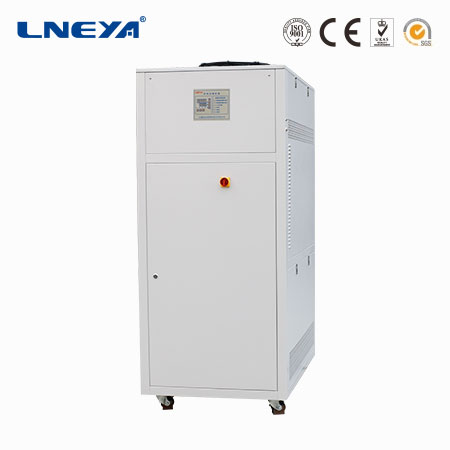
The structural composition of the water chiller is roughly the same,
which is composed of compressor, evaporator, condenser, throttling element and
electric control system. However, the glycol chiller adopts low-temperature
compressor and is equipped with economic separator and other components, which
are still different.
1、In order to keep the
pressure in the evaporator low enough to ensure that the refrigerant evaporates
at a sufficiently low boiling temperature, a compressor is used to extract the
evaporated refrigerant gas, that is, the refrigerant steam with low temperature
and low pressure is compressed into a refrigerant gas with high temperature and
high pressure. When the suction speed of the compressor is greater than the
evaporation speed of the refrigerant, the evaporation pressure and evaporation
temperature will decrease. Conversely, the suction speed of the compressor is
less than that of the refrigerant, and the evaporation temperature and pressure
will rise accordingly.
2、 High temperature and
high pressure refrigerant is condensed into liquid in the condenser. In the
condenser, the refrigerant releases heat to air or water lower than its
temperature. This part of heat includes the heat absorbed when the refrigerant
evaporates in the evaporator and the heat converted when the compressor
compresses. Special attention: the temperature of air or water must be lower
than that of refrigerant, otherwise the refrigerant cannot release heat, that
is, the temperature of cooling medium (cooling tower water or air) must be lower
than that of refrigerant gas at the outlet of compressor.
3、Through the restrictor,
the pressure of the refrigerant drops from the condensation pressure to the
evaporation pressure. The liquid from the condenser is stored in the liquid
reservoir. At this time, the refrigerant is in the state of normal temperature
and high pressure. After passing through the expansion valve, the boiling point
decreases due to the decrease of pressure. After entering the evaporator, the
liquid is easy to absorb heat and evaporate.
Related recommendations
-
VOCS condensation price and maintenance instructions
1946The performance of VOCS condensing equipment is closely related to the VOCS condensing price. The proper VOCS condensing equipment is definitely superior in performance. What should be paid attention to in the maintenance of VOCS condensing equipm...
View details -
The Analysis Of How To Maintain The Low Temperature Circulator In Daily Life
2194Guanya is a leading role in heating cooling circulator. It provides the customers with proposal and technology of controlling the cold and heat, temperature control system with stable property, extending the service life of heating cooling circula...
View details -
The Refrigeration Principle of Heating Cooling Circulator
2178Heating cooling circulator is the use of limited refrigerant in the closed refrigeration system, repeatedly refrigerant compression, condensation, expansion, evaporation, constantly in the evaporator heat absorption vaporization, cooling. The heat...
View details -
High-pressure failure of stainless steel cryogenic refrigerator
2533At the high speed of the stainless steel cryogenic refrigerator compressor, the temperature rises and the compressor generates high air pressure, which causes the high voltage protection relay to operate. The discharge pressure of the compressor r...
View details


