LNEYA Thermo Refrigeration Co.,Ltd


The Reasons of Frosting on Ultra low Temperature Recirculating Chillers
Industry News 소식 2057
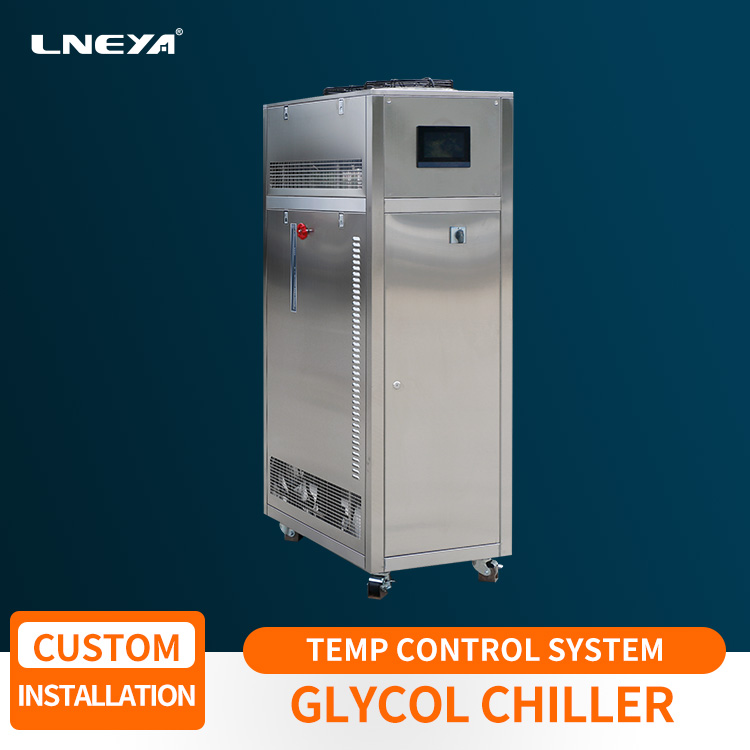
Frosting will appear when many users take advantage of ultra low temperature recirculating chillers, while some are not. It is confusing and whether it is relevant to refrigeration.
First of all, why does ultra low temperature recirculating chillers frost? To sort it out, we can turn our eyes on the reasons of direct-cooling ultra low temperature recirculating chillers. The frost is a white crystal of vapour which will congeal on the surface of ultra low temperature objects.
The air will frost on the surface of the inner wall inside ultra low temperature recirculating chillers, which is the root cause. It will affect the heat transfer efficiency, resulting in the decline of refrigerating capacity, so the users should remove it manually.
We understand why the ultra low temperature recirculating chillers will frost on one hand, and for the other hand the air-cooled one is frostless. Are their reasons against each other? The principle of that is the air-cooled ultra low temperature recirculating chillers applies air to refrigerate. When high temperature air flows through the inner evaporator, both of them will change the heat directly because they are in opposite conditions so that the temperature of air will lower.
Meanwhile, cool air is blown in the ultra low temperature recirculating chillers, which is exactly what air-cooled one uses for cycling constantly to reduce its own temperature. However, vapor always exists in the air, so it becomes solid when it freezes, which shows that whenever heat transfer happens, frosting will be in the ultra low temperature recirculating chillers.
In fact, air-cooled ultra low temperature recirculating chillers is carried with frost, but only on the surface of the evaporator. When opening the door, we can not see it because the frost is inside. Thus, we call it as frostless on the whole.
Therefore, we make it clear why ultra low temperature recirculating chillers is out of frosting.
Related recommendations
-

How to complete the temperature control equipment for the isolation reactor?
2117The reactor is a commonly used reactor in pharmaceutical and chemical production. The isolation reactor temperature control equipment is realized by controlling two doors, namely the heating water valve and the cooling water valve. The mixing of t...
View details -

The necessity of temperature heating and cooling cycle in the process of catalytic hydrogenation
2228In recent years, with the rising price of oil, the demand for benzene obtained from coking benzene has increased, coupled with the country's increasing emphasis on environmental protection, the widespread application of coking benzene hydrogenatio...
View details -

Application and advantages of new energy automotive motor test equipment
1943LNEYA's new energy motor test equipment is used in HEV (Hybrid Electric Vehicle), BEV (Electric Vehicle), Hydrogen Power Vehicle, Fuel Cell Electric Vehicle, EREV (Extended Range Electric Vehicle) and other new energy vehicles. LNEYA's equipment a...
View details -
How to ground the electric vehicle battery test driver?
2223The electric vehicle battery test is in the running state, and it is necessary to understand the operation of the accessories, and the drive and other accessories are in operation. If the electric vehicle battery test is not isolated between the A...
View details