 LNEYA Thermo Refrigeration Co.,Ltd


Principle Analysis of Glycol Chiller
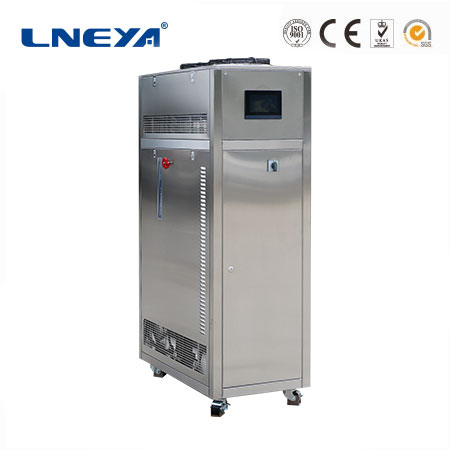
Glycol chiller is an industrial chiller
with glycol as refrigerant. The structure of glycol chiller is roughly the same
as that of ordinary industrial chiller, which is composed of compressor,
evaporator, condenser and electric control system. In order to ensure the
stable operation of glycol chiller, we suggest that you take explosion-proof
measures and buy explosion-proof glycol chiller as far as possible.
1、 Operation of compressor
In order to ensure that the pressure inside
the evaporator is low enough and that the refrigerant is at such a low
temperature, the compressor is used to extract the evaporated refrigerant and
compress the low temperature and low pressure into high temperature and high
pressure refrigerant gas.
2、 Use of condenser
High temperature and high pressure
refrigerant condenses into liquid in the condenser. The refrigerant in the
condenser releases heat in air or water lower than its temperature. Of course,
the temperature of air or water must be lower than that of refrigerant.
3、 How to throttle
After passing through the restrictor, the
refrigerant of the chiller drops from the condensation pressure to the
evaporation pressure, so the liquid from the condenser can be placed in the
liquid reservoir. At this time, the refrigerant is in the state of normal
temperature and high pressure, and then passes through the expansion valve to
reduce the boiling point, enters the evaporator, and the liquid absorbs heat
and evaporates.
4、 Endothermic evaporation
After passing through the restrictor, the
refrigerant liquid with low temperature and low pressure exchanges with the
evaporator, and the absorbed heat becomes saturated or superheated steam.
Related recommendations
-
Semiconductor Temperature Forcing System Thermal Flow Hood for DUT Testing
1921The semiconductor temperature forced system (TFS), thermal flow meter and thermal flow hood are important equipment used to test the performance of semiconductor devices under different temperature conditions. These equipment are usually u...
View details -
Changes in temperature control methods during semiconductor testing
2354As the use of semiconductor devices expands into new areas, such as automotive electronics, stricter requirements are imposed on their performance. Example: Devices are now required to operate at very low temperatures (about -40°C). To determine w...
View details -
Temperature control instructions for stainless steel reactors and glass reactors
2386Reactor is a kind of reaction equipment in industrial production. It generally needs to be refrigerated or heated. Whether the temperature is suitable or not directly affects its reaction effect. Therefore, if conditions permit, it is generally e...
View details -
Effect of High Precision Semiconductor Constant Temperature Series Evaporator on Refrigeration
1647The high-precision semiconductor constant temperature series of different models of the equipment, the choice of evaporation is also different, then, what effect does the heat exchanger have on the high-precision semiconductor constant temperature...
View details


