 LNEYA Thermo Refrigeration Co.,Ltd


Temperature description of glycol chiller
For users and friends, it is necessary to
have a deep understanding of glycol chillers before use. It is recommended to
know the temperature in various equipment such as refrigeration system,
evaporating temperature, condensing temperature, etc.
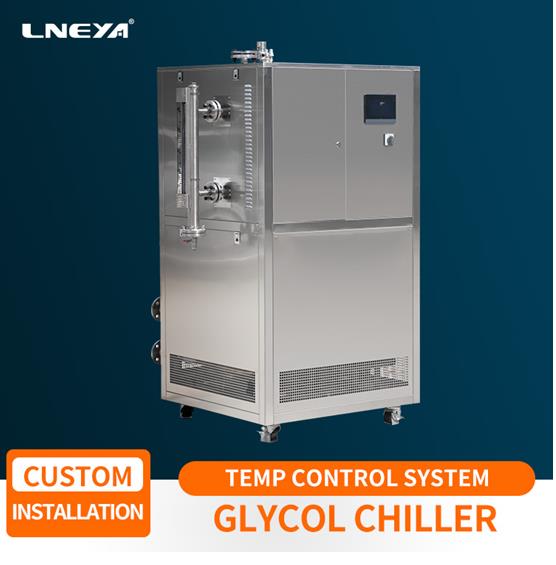
If the refrigeration system of the glycol
chiller can operate safely, three points need to be paid attention to:
1. The pressure of the refrigerant in the
refrigeration system needs to be observed at any time to avoid abnormal high
pressure, so as to avoid rupture;
2. The phenomenon of damp heat stroke and
liquid shock shall not occur and occur, so as to avoid damage;
3. Pay attention to timely maintenance of
each component, so as to avoid component defects and cause malfunction of the
glycol chiller.
The evaporation temperature of a glycol
chiller refers to the temperature at which the refrigerant in the evaporator
inside the unit boils and vaporizes under a fixed pressure. The condensing
temperature is the gas refrigerant in the condenser of the unit, and the
temperature at which it condenses into a liquid under a certain pressure is
called the condensing temperature. The recooling (or subcooling) temperature
refers to the temperature at which the condensed liquid refrigerant is cooled
to below the condensing temperature under the condensing pressure, which is
called the recooling temperature (or subcooling temperature). The intermediate
temperature of the glycol chiller refers to the two-stage compression system.
The saturation temperature of the refrigerant in the intercooler at the
intermediate pressure is called the intermediate temperature.
In fact, the temperature description of the
glycol chiller is quite a lot. So how to detect the suction temperature and
discharge temperature of the glycol chiller compressor after knowing these
temperatures? The suction temperature of the compressor can be measured from
the thermometer in front of the suction valve of the compressor. The suction
temperature is generally higher than the evaporating temperature, and the difference
depends on the length of the return pipe and the insulation of the pipe.
Generally, it should be 5-10 higher than the evaporating temperature. The
superheat can be adjusted by changing the liquid supply; The air temperature
can be measured from a thermometer on the exhaust pipe. The exhaust temperature
of a glycol chiller is directly proportional to the (suction and exhaust)
pressure ratio and the suction temperature. The higher the suction superheat
and the higher the pressure ratio, the higher the exhaust temperature,
otherwise the opposite. Generally, the exhaust pressure is slightly higher than
the condensing pressure.
Therefore, in order to better run the
glycol chiller, users still need to understand it. If you don’t
understand, you can contact us at sales@cnzlh.com. LNEYA is a chiller
manufacturer.
Related recommendations
-
Principle Analysis of Glycol Chiller
2054Glycol chiller is an industrial chillerwith glycol as refrigerant. The structure of glycol chiller is roughly the sameas that of ordinary industrial chiller, which is composed of compressor,evaporator, condenser and electric control system. ...
View details -
How to Deal with the Poor Dissipation of Low Temp Chillers
2306Low temp chiller products contribute a lot to various industrial production, and at the same time, help to improve the labor efficiency of industrial production. With the development of China's economy and the improvement of production process req...
View details -
The Effect of Heating Cooling Translator
1796The whole liquid circulation of the heating and cooling circulator is closed with the expansion vessel. The expansion vessel and the liquid circulation are adiabatic and do not participate in the liquid circulation. This is just a mechanical conne...
View details -
Temperature control thermostat equipped with microchannel reactor
2970microchannel reactor temperature control
View details


