LNEYA Thermo Refrigeration Co.,Ltd


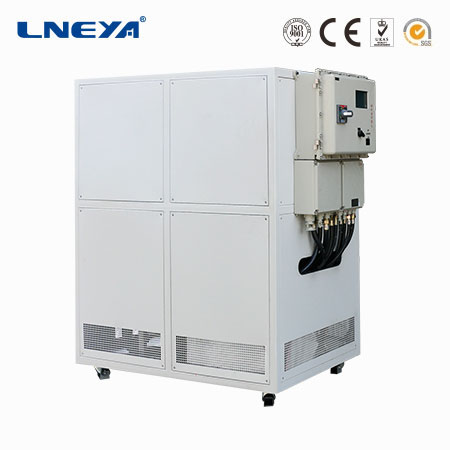
Water chiller for high and low temperature testing of aviation fuel
High and low temperature cooling of aviation fuel usually requires the use of water-cooled chillers rather than air-cooled chillers. This is because water-cooled chillers have higher energy efficiency and better temperature control accuracy, and are more suitable for the cooling needs of aviation fuel.
Application of water chillers in high and low temperature testing of aviation fuel:
Low temperature requirements:
- Fuel freezing point test: used to test the freezing point of aviation fuel at low temperatures to ensure that the fuel will not freeze under cold conditions.
- Low temperature performance test: evaluate the performance parameters such as fluidity and viscosity of aviation fuel under low temperature conditions to ensure that the fuel can be transported and burned normally at low temperatures. In cold areas, the fuel may need to be cooled between -40°C and -50°C.
High temperature requirements:
- Thermal stability test: evaluate the thermal stability of aviation fuel under high temperature conditions to ensure that the fuel will not decompose or produce harmful substances under high temperature conditions.
- Volatility test: test the volatility of the fuel at high temperatures to ensure that the fuel will not volatilize excessively under high temperature conditions. In high temperature areas, the fuel may need to be cooled between 30°C and 40°C.
Temperature Cycle Test:
•Thermal Cycle Performance Test: Simulates the cyclic changes of aviation fuel under different temperature conditions to evaluate the performance stability of the fuel under temperature change conditions. It is usually necessary to control the temperature within the range of ±1°C to ±0.5°C to ensure the stability and safety of the fuel during transportation and storage.
Temperature Variation Range:
•Aviation fuel may experience large temperature changes in different seasons and regions, so the cooling system needs to be able to adapt to a wide temperature variation range. The water chiller needs to be able to operate over a wide temperature range, usually covering a range from extremely low temperatures (such as -60°C) to higher temperatures (such as above 40°C). The ability to quickly switch between high and low temperatures to simulate the rapid temperature changes of aviation fuel under different temperature conditions is very important for evaluating the thermal cycle performance of the fuel.
In summary, water-cooled chillers are more suitable for the high and low temperature cooling needs of aviation fuel due to their high energy efficiency, precise temperature control and stability. When selecting a chiller, it is also necessary to consider factors such as specific application scenarios, cooling requirements, available space, and ease of maintenance.
LN -60°C~ -10°C
MORELJ -45°C~ -10°C
MORELD -80°C~ -30°C
MORERelated recommendations
-
What Type of Chiller is Best for Laboratory Use
1879Looking for the best chiller for your lab? This guide covers lab chiller types, how they work, key specs, and expert tips to help you choose the right one.
View details -
How to use high and low temperature circulation equipment in extraction and separation?
1837With the continuous development of science and technology, high and low temperature cycle industrial temperature control equipment plays an important role in many fields, especially in the field of extraction and separation. This article will expl...
View details -
How to Select Air Cooled Chiller and Water Cooled Chiller?
1878LNEYA offers you free guidance on choosing the right chiller, along with a wide range of air-cooled and water-cooled chillers with different performance options.
View details -

LT 10℃~30℃
4513Saving water resources & circulating cooling Product Description 1. Can use ethylene glycol mixed with water for circulating refrigeration, saving resources 2. Circulating pipeline design, prolong the use time of circulating water 3. Ad...
View details
Expand more!