 LNEYA Thermo Refrigeration Co.,Ltd


How Does the Chilled Water System Work in an Industrial Chiller
In many factories and labs the chilled water system keeps processes stable and equipment safe. This article explains how an industrial chiller chilled water system works.
1 What is an Industrial Chiller Chilled Water System
A chilled water system is a closed loop that moves heat away from a process and tosses that heat to the outside. The chiller creates cold water. Pumps move that water to the machines that need cooling. Heat flows out of the process and into the chiller, then out of the chiller and into the atmosphere via a cooling tower or air side.
2 Chilled Water System Components
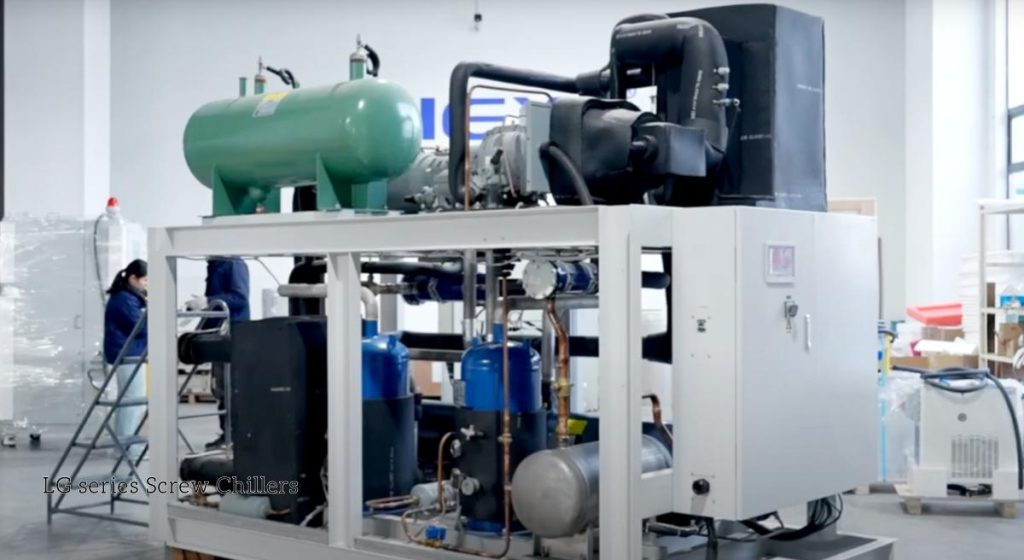
The Chiller
• Evaporator
The evaporator is the place where process water parts with its heat. Common designs include shell and tube and brazed plate. Aim for a tight approach between refrigerant and water. A small approach means more capacity and lower compressor load.
• Compressor
Industrial chillers use screw, centrifugal, or scroll compressors. Screw and centrifugal machines are common for larger loads. Compressor control is one major lever for efficiency.
• Condenser
A water cooled condenser works with an external cooling tower. An air cooled condenser rejects heat directly to the plant air. Water cooled designs usually win on efficiency. Air cooled designs win on simplicity and lower water use.
• Expansion Valve
The expansion valve controls refrigerant flow into the evaporator. Modern systems may use electronic expansion valves for precise superheat control. Proper superheat protects compressors and keeps the evaporator wetting properly.
Chilled Water Circulation System
• Water Pump
Pumps move chilled water through the loop. Variable speed pumps with motor drives allow differential pressure control and save a lot of motor energy. Select pumps to meet design flow and net positive suction head.
• Chilled Water Piping
Supply and return lines form the loop. Insulation matters. Poor insulation raises load and cold water may never reach the point of use.
• Water Treatment Equipment
Scale, corrosion, and biological growth kill heat transfer. Treatment usually includes filtration, chemical inhibitors, and periodic biocide.
• Primary and Secondary Pumping
For systems with multiple chillers or variable flow loads the primary secondary arrangement is common. The primary loop forces flow through the chiller bundle. The secondary loop handles building or process flow. This design isolates the machine from wide swings in load and helps avoid short cycling.
The Load
Loads vary widely. In a plastics plant a mold may need tight water temperature control to avoid part shrink. In medical imaging racks the chill requirement is steady and low. Match chiller capacity to expected peak heat load and expected delta T. Over sizing invites short cycles. Under sizing invites overheating.
Control System
• Temperature Sensors and Controllers
Supply and return sensors should be on straight pipe tapped into full flow. Control loops use these readings to drive compressor speed and pump speed.
• Pressure and Flow Monitoring
A differential pressure sensor across the evaporator tells you about fouling. Flow meters on major branches confirm actual circulation.
Other Components
• Cooling Tower
Water cooled chillers reject heat to the cooling tower. Tower performance depends on approach to wet bulb temperature and on clean fill.
• Bypass or Buffer Tank
Buffer tanks store thermal mass and reduce the risk of short cycling. They also stabilize delta T in variable flow systems. Tank sizing depends on system volume and pump characteristics.
3 How a Chilled Water System Works
Warm Water Returns from the Load
Warm return water arrives at the chiller carrying process heat.
Heat Absorption in the Evaporator
As warm water crosses the evaporator its heat transfers into the refrigerant. The refrigerant boils and leaves as low pressure vapor.
Chilled Water Circulation
The pump pushes chilled water back to the load. If the load drops the control system reduces compressor capacity or slows pumps. In a primary secondary layout the primary pump maintains correct flow through the chiller while the secondary pump serves the load.
Control and Monitoring
A chiller controller handles sequencing, alarm history, and remote setpoint changes. Typical controls include lead and lag chiller sequencing, reset of chilled water setpoint based on outside conditions, and alarms for low flow and high approach.
4 How to Maintain a Chilled Water System
Inspect Pumps and Valves
Check pumps for vibration and unusual noise during daily rounds. Inspect mechanical seals and coupling alignment monthly. Exercise valves monthly and record stroke and position. Replace worn bearings and seals during scheduled outages.
Clean Piping and Heat Exchangers
Monitor differential pressure across strainers and across the evaporator. A rising differential pressure signals fouling. Use backflush cleaning where possible. For heavy scale arrange chemical descaling during planned shutdown.
Test Water Quality
Sample water on a schedule set with the treatment vendor. Typical checks include pH hardness conductivity and microbial presence. Adjust inhibitors to maintain the recommended concentration.
Calibrate Temperature Sensors
Verify supply and return sensors on a regular cadence. A simple ice bath or calibrated thermometer will confirm accuracy. Incorrect temperature readings lead to bad control decisions and produce higher energy use or thermal excursions.
Conclusion
If you need a tighter checklist for your site we can add a field friendly inspection sheet that lists checks frequencies and alarm thresholds.
Or are you looking for a reliable chiller manufacturer to get a detailed quotation for your cooling system? LNEYA is ready to provide you with customized temperature control solutions.

Recent Blogs
- LNEYA, 칭화대학교와 고출력 칩 열관리 핵심기술 공동연구 협력 체결
- LNEYA at ASPS 2026 | Advanced Semiconductor Packaging & Chiplet Show Korea
- What Does a 200 Ton Chiller Cost
- Temperature Control in Photolithography
- Is a Used Chiller a Good Idea
- Chiller Components and Refrigeration Fundamentals Guides
- Chiller Types and Selection Guides
- How Does a Peltier Cooler Work
Catalog
- 2026년 9월
- 2026년 6월
- 2025년 12월
- 2025년 11월
- 2025년 10월
- 2025년 9월
- 2025년 8월
- 2025년 7월
- 2025년 6월
- 2025년 5월
- 2025년 3월
- 2025년 2월
- 2025년 1월
- 2024년 12월
- 2024년 11월
- 2024년 10월
- 2024년 9월
- 2024년 8월
- 2024년 7월
- 2024년 6월
- 2024년 5월
- 2024년 4월
- 2024년 3월
- 2024년 2월
- 2023년 9월
- 2023년 7월
- 2023년 6월
- 2023년 5월
- 2023년 1월
Tag
air cooled chiller chiller Chiller Installation Chiller Maintenance chiller refrigerant chillers Cold Assembly Freezer cooling chiller cooling heating system cooling system dynamic temperature control system energy efficient chiller explosion-proof chiller freezer heating circulator industrial chiller industrial chillers industrial cooling industrial freezer industrial refrigerator jacket reactor laboratory chiller low temperature chiller news oil chiller process chiller process cooling reactor chiller reactor cooling reactor cooling heating reactor heating cooling refrigerated circulator screw chiller semiconductor chiller semiconductor test chiller sundi tcu temperature control test chamber thermostat ultra low temperature chiller vehicle test chiller water chiller water cooled chiller
Contact Us
Related Chillers



CONTACT US
TEL:
EMAIL:
WeChat & WhatsApp:

Wechat QR

Have a question or need a quote? Fill out the form below, and our team will get back to you within 24 hours.


