 LNEYA Thermo Refrigeration Co.,Ltd


When Do You Need an Oil Chiller
Walk into any machine shop or plant floor and you’ll feel it—heat. It’s not just a by-product, it’s something that hangs in the air and works against you all day. A spindle running hard, a hydraulic unit pushing against load, a gearbox that never gets a break… they all pump heat into the system. Let it go unchecked and pretty soon you’ll see slower cycles, more wear on parts, and repair tickets stacking up.
Most of the time, a water chiller will keep things under control. But certain jobs or conditions push past its limits. That’s when switching to an oil chiller makes sense. Make that call at the right time, and you keep your process stable, protect the hardware, and save your crew from chasing coolant problems week after week.
What is an Oil Chiller
So, what is an oil chiller in simple terms? Picture the same basic idea as a water chiller, but with oil in the loop. The oil flows through the equipment, pulls the heat away, and comes back to the unit. The chiller’s refrigeration section strips that heat out before sending the oil back for another pass.
Here’s the bonus—oil isn’t only there to take heat away. It can also keep parts moving smoothly. That’s why an oil cooling setup often plays a double role: cooling and lubrication. You’ll see this in places like:
• CNC spindles that need both precision and smooth rotation
• Hydraulic systems that can’t afford viscosity swings
• Gear drives that run all day without slowing down
• Turbines where bearing life depends on stable lube temperature
True, oil can’t carry as much heat per liter as water. But it’s far less fussy about extreme conditions. It won’t boil when things get hot, it won’t freeze when things get cold, and it’s kinder to moving parts. That’s why in certain jobs, it’s the smarter pick.
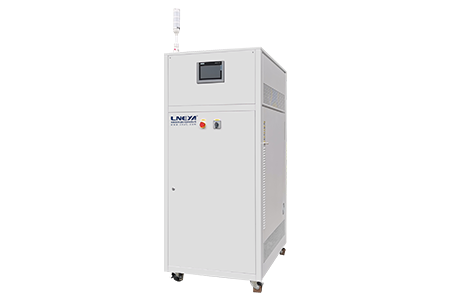
When Do You Need an Oil Chiller
1. Wide or High Operating Temperature Range
Water is a great coolant for moderate temperature control, but it has limits. Below 0 °C (32 °F), water freezes. Above about 90 °C (194 °F), it can start boiling or flashing to steam. Even glycol-water mixtures have practical limits in high-temperature environments.
Thermal oil works where water can’t. Many oil chillers can operate reliably from –20 °C (–4 °F) up to 120 °C (248 °F) or higher, depending on the oil formulation. This wide temperature window is essential for:
• Plastic extrusion lines where oil must stay hot to keep materials flowing smoothly
• Heat-intensive metal machining where water would vaporize
• Low-temperature environments where freezing is a risk
If your process needs cooling outside water’s safe range, an oil chiller is not just an option—it’s a necessity.
2. Equipment That Needs Cooling and Lubrication
Some equipment can’t run without constant lubrication, and it’s efficient to combine that function with cooling.
A typical example is a high-speed CNC spindle. The spindle bearings need oil lubrication to reduce friction and wear, but they also heat up quickly under load. An oil cooling system circulates the same fluid to both remove heat and lubricate components.
Hydraulic systems are a good example of where oil cooling really shines.Hydraulic oil doesn’t just move power—it also deals with the heat that comes with high loads.Push a pump or actuator hard enough, and the oil temperature climbs.Once it gets too hot, viscosity drops, response slows, and seals or pump components can wear out faster than you’d like.
An oil chiller keeps the oil in that sweet temperature range, so the system stays sharp and components last longer.
3. When Water Isn’t the Best Coolant
Sure, water is cheap and pulls heat quickly—but it’s not always the right fit.
• Corrosion risk – untreated water can rust steel parts or eat into certain alloys.
• Scale buildup – minerals in hard water stick to cooling channels, and over time, heat transfer suffers.
• Contamination risk – in food, pharma, or other clean applications, even a small leak can compromise product safety.
Oil avoids these issues. It doesn’t cause scaling, and it forms a protective layer that keeps moisture away from critical parts.If water would be a headache—or a liability—oil cooling is the safer long-term bet.
Related:Oil Cooling vs Water Cooling Chiller System
4. When You Need Rock-Solid Temperature Control
Some jobs can’t handle a degree or two of temperature swing.If you’re chasing precision machining tolerances, keeping hydraulic fluid viscosity stable, or avoiding thermal distortion in assembly, oil can help.
Water moves heat fast, but that also means its temperature can change fast—especially if the load or ambient temperature shifts suddenly.Oil has more thermal mass and viscosity, so it absorbs heat changes slower.In other words, it smooths out the spikes, acting as a thermal buffer that keeps your process steady.
5. When You Want Less Maintenance
Water cooling systems need constant attention: pH checks, corrosion inhibitors, biocide dosing.Even with good treatment, scaling and fouling happen, and you’ll be shutting down for cleaning.
Oil chillers are different.
You’re mostly looking at oil quality checks, filter changes, and oil replacement on a set schedule.The loop is closed, so contamination is rare—and you skip the chemical treatment altogether.
For sites with limited maintenance staff or processes where downtime is expensive, oil chillers can mean less hassle and more uptime over the long haul.
Conclusion
An oil chiller isn’t the answer to every cooling job—but in the right setting, it can beat water hands down.
If you’re running high temps, need cooling and lubrication in one loop, want tighter temperature stability, or can’t afford constant maintenance, it’s worth a serious look.
At LNEYA, we build oil chillers for everything from CNC spindles to heavy process systems.Whether you need a compact unit or a high-capacity setup, our engineers can match you with a system that keeps your operation running smoothly.

Recent Blogs
- LNEYA, 칭화대학교와 고출력 칩 열관리 핵심기술 공동연구 협력 체결
- LNEYA at ASPS 2026 | Advanced Semiconductor Packaging & Chiplet Show Korea
- What Does a 200 Ton Chiller Cost
- Temperature Control in Photolithography
- Is a Used Chiller a Good Idea
- Chiller Components and Refrigeration Fundamentals Guides
- Chiller Types and Selection Guides
- How Does a Peltier Cooler Work
Catalog
- 2026년 9월
- 2026년 6월
- 2025년 12월
- 2025년 11월
- 2025년 10월
- 2025년 9월
- 2025년 8월
- 2025년 7월
- 2025년 6월
- 2025년 5월
- 2025년 3월
- 2025년 2월
- 2025년 1월
- 2024년 12월
- 2024년 11월
- 2024년 10월
- 2024년 9월
- 2024년 8월
- 2024년 7월
- 2024년 6월
- 2024년 5월
- 2024년 4월
- 2024년 3월
- 2024년 2월
- 2023년 9월
- 2023년 7월
- 2023년 6월
- 2023년 5월
- 2023년 1월
Tag
air cooled chiller chiller Chiller Installation Chiller Maintenance chiller refrigerant chillers Cold Assembly Freezer cooling chiller cooling heating system cooling system dynamic temperature control system energy efficient chiller explosion-proof chiller freezer heating circulator industrial chiller industrial chillers industrial cooling industrial freezer industrial refrigerator jacket reactor laboratory chiller low temperature chiller news oil chiller process chiller process cooling reactor chiller reactor cooling reactor cooling heating reactor heating cooling refrigerated circulator screw chiller semiconductor chiller semiconductor test chiller sundi tcu temperature control test chamber thermostat ultra low temperature chiller vehicle test chiller water chiller water cooled chiller
Contact Us
Related chillers



CONTACT US
TEL:
EMAIL:
WeChat & WhatsApp:

Wechat QR

Have a question or need a quote? Fill out the form below, and our team will get back to you within 24 hours.


