LNEYA Thermo Refrigeration Co.,Ltd


Temperature control system for reaction kettle
The reaction kettle temperature control system is an automated equipment used to precisely control the temperature of materials inside the reaction kettle, widely used in fields such as chemical, pharmaceutical, biochemical, and material science.
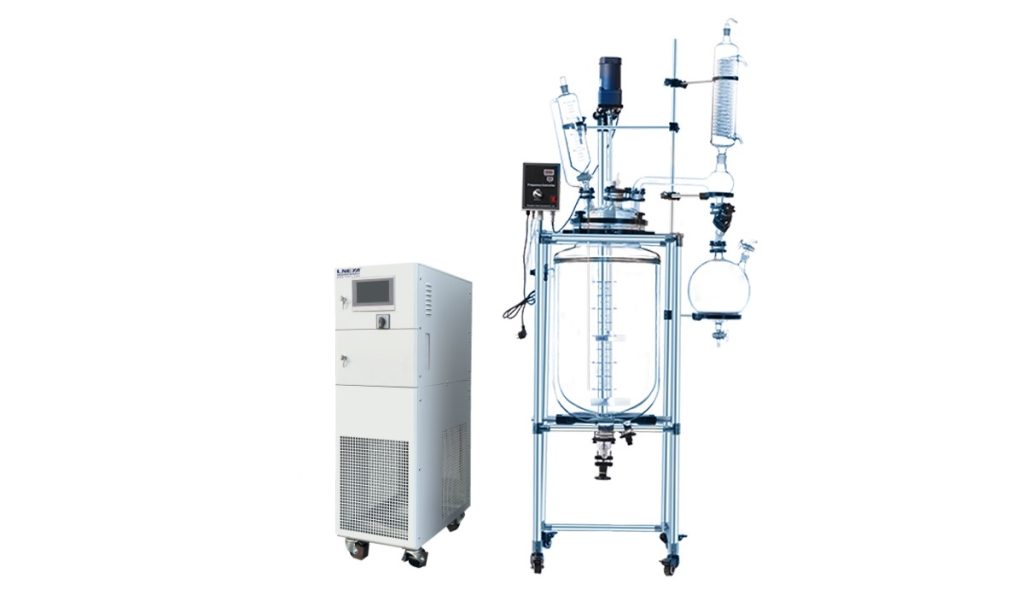
The system typically consists of the following key components and has specific functions and characteristics:
Heating Unit: including steam coils, electric heating wires, etc., used to provide heat to the materials in the reactor. The heating method can be selected based on process requirements, such as electric heating, steam heating, or other medium heating (such as oil bath, mineral oil, molten salt, etc.).
Cooling Unit: such as cooling water system, freezer, etc., used to remove heat from the reactor and achieve cooling. The integrated refrigeration and heating system can automatically switch heating or cooling modes as needed to maintain constant temperature conditions.
Temperature Sensor: installed inside or outside the reactor, monitoring the actual temperature of materials and transmitting temperature signals to the control system.
Intelligent Controller: Receive feedback information from temperature sensors, and automatically adjust the working status of heating or cooling units through PID (proportional integral derivative) control algorithm or other advanced control strategies to achieve precise temperature control. Modern control systems may also have functions such as adaptive fuzzy control, multi-point temperature control, and remote monitoring.
Information layer, control layer, and equipment layer: constitute a complete automation control system architecture. The information layer processes data and instructions, the control layer executes decisions, and the equipment layer contains the hardware that actually performs heating, cooling, and stirring operations.
Circulating System: The fully enclosed circulating pipeline ensures that the medium (such as water or oil) circulates within the system, achieving efficient heat exchange while reducing the risk of pollution.
Security Protection: The system is equipped with multiple security measures, such as over temperature, over pressure, leak detection, etc., to ensure safe operation. 8. Universal database platform: facilitates the storage and retrieval of formulas and experimental conditions, as well as the export and analysis of experimental data.
The selection and design of a reaction kettle temperature control system should consider factors such as process requirements, temperature range, reaction material characteristics, cost-effectiveness, etc., to ensure the stability, safety, and efficiency of the reaction process. In continuous production technology, this system is even more indispensable because it can adapt to different reaction conditions, such as continuous nitrification, hydrogenation, chlorination, esterification, oxidation, etc., ensuring product quality and production efficiency.
SUNDI Z Frequency Conversion Series
MORESUNDI -10℃~150℃
MORESUNDI -80℃~250℃
MORESUNDI-320/320W
MORESUNDI -25℃~200℃
MORESUNDI -45℃~250℃
MORERelated recommendations
-

SUNDI -25℃~300℃
4132INQUIRY Product Description ● Working temperatures from -120°C to +350°C ● Previously unachievable performance ●Intelligent temperature control ● Maximum process stability and reproducibility ● Adop plate heat exchager, Pipel...
View details -
HRT -45℃~250℃
3916INQUIRY Product Description The cooler is a very important part of the screw air compressor. The main function is to cool the lubricating oil of air compressor and the compressed air. If it's blocked, then the temperature will...
View details -
Application Of Jacketed Reactor Cooling And Heating System In Chemical Reactions
2099In the chemical industry, jacketed reactor cooling and heating devices are widely used in various chemical reactions. Application of jacketed reactor cooling and heating devices in various chemical reactions: Polymerization is a common chemical r...
View details -
SUNDI -80℃~250℃
3811INQUIRY Product Description ● Working temperatures from -120°C to +350°C ● Previously unachievable performance ●Intelligent temperature control ● Maximum process stability and reproducibility ● Adop plate heat exchager, P...
View details
Expand more!