 LNEYA Thermo Refrigeration Co.,Ltd


How Does a Precision Air Conditioner Work
We’re probably familiar with air conditioners, such as home air conditioners and HVAC systems, which regulate indoor temperature and dehumidify for comfort. These devices need to cool the entire space.
However, for production equipment, processes, and workshops in semiconductor, LCD, and solar panel factories, this type of temperature and humidity control isn’t very precise. Furthermore, conventional air conditioners cool too large a space, potentially wasting energy.
To address this issue, a transition from centralized management to distributed, high-precision temperature and humidity management is necessary. Consequently, precision air conditioners, also known as spot coolers, were designed and manufactured.
The flexibility offered by this localized temperature control avoids the energy waste associated with over-controlling the overall environment.
So, how does precision air conditioners work?
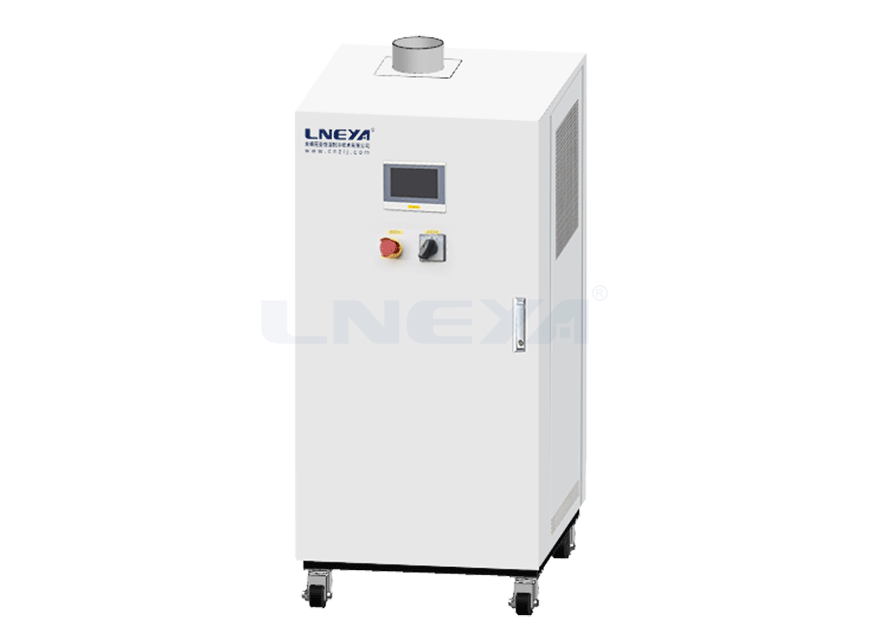
1.Heat Intake from the Room
Heat starts at the equipment. Racks, power supplies, and controllers dump heat into the room. Warm air rises and gathers near the ceiling or around the racks. A precision air conditioner captures that return air quickly. It pulls the hot stream into the unit so the heat does not linger. Fast capture prevents local hotspots and keeps sensors honest.
2.Cooling and Dehumidification
Air enters the air handling section and flows over the evaporator coil. That coil contains refrigerant at low pressure. Before the coil, a metering device drops the refrigerant pressure. That drop lets part of the liquid flash into vapor. When liquid turns to vapor it absorbs a lot of heat. That is where most cooling happens.
As the air crosses the cold coil, water vapor condenses on the coil surface. Droplets form and drain away. That removes moisture from the air. The coil temperature matters. If the coil sits below the room dew point, more moisture is removed. Controllers watch coil temperature, supply temperature, and relative humidity.
If humidity falls too far, the system can reheat a little. Reheat options include electric heaters, hot gas reheat, or mixing in warmer return air. Reheat protects against static and brittle electronic problems.
3.Refrigerant Flow and Heat Rejection
The refrigerant leaves the evaporator as a low-pressure vapor. The compressor then raises its pressure and temperature. Compression makes the vapor able to give up heat outside the room. The hot, high-pressure vapor moves to the condenser. The condenser rejects that heat to air or to water. Common setups are air-cooled condenser, water-cooled shell-and-tube, or a glycol loop for remote heat rejection.
In the condenser the vapor condenses back to liquid. Often the liquid is slightly subcooled to improve efficiency. Then the liquid passes through the metering device again and the cycle repeats. Precision units may use multiple compressors or two independent refrigerant circuits. That gives redundancy and smoother capacity control.
4.Precise Air Distribution
Cool, dry air leaves the unit and gets sent back into the room where it is needed. Delivery methods vary. Some jobs use underfloor delivery and let air rise through perforated tiles near racks. Others use in-row cooling that sits between equipment rows and blows air directly into rack fronts.
Overhead ducting is another choice. The common goal is even temperatures at the intake of each device. Avoiding recirculation and short-circuiting of air is key. Small changes in grille placement or tile location can make a big difference.
5.Monitoring, Controls, and Fine Tuning
Sensors feed the controller with supply temperature, return temperature, humidity, refrigerant pressures, and sometimes superheat at the evaporator outlet. The controller adjusts compressor speed, fan speed, pump flow, and the expansion valve. Modern systems use variable-speed compressors and EC fans to match cooling to the load. That reduces short cycling and saves energy.
For humidity control the controller can mix modes: dehumidify then reheat, or use staged cooling and hot gas bypass. Alarms alert operators to drifting conditions. Many units connect to a building management system for trend logging and remote alerts. That visibility turns small anomalies into fixable events before equipment trips.
Conclusion
Looking for reliable precision air conditioning for your equipment and processes? LNEYA offers standard equipment capable of controlling temperature to ±1°C and humidity to ±1% RH. If you have more stringent temperature and humidity requirements, we can also customize it.
Contact us today to discuss your temperature control needs.

Recent Blogs
- LNEYA, 칭화대학교와 고출력 칩 열관리 핵심기술 공동연구 협력 체결
- LNEYA at ASPS 2026 | Advanced Semiconductor Packaging & Chiplet Show Korea
- What Does a 200 Ton Chiller Cost
- Temperature Control in Photolithography
- Is a Used Chiller a Good Idea
- Chiller Components and Refrigeration Fundamentals Guides
- Chiller Types and Selection Guides
- How Does a Peltier Cooler Work
Catalog
- 2026년 9월
- 2026년 6월
- 2025년 12월
- 2025년 11월
- 2025년 10월
- 2025년 9월
- 2025년 8월
- 2025년 7월
- 2025년 6월
- 2025년 5월
- 2025년 3월
- 2025년 2월
- 2025년 1월
- 2024년 12월
- 2024년 11월
- 2024년 10월
- 2024년 9월
- 2024년 8월
- 2024년 7월
- 2024년 6월
- 2024년 5월
- 2024년 4월
- 2024년 3월
- 2024년 2월
- 2023년 9월
- 2023년 7월
- 2023년 6월
- 2023년 5월
- 2023년 1월
Tag
air cooled chiller chiller Chiller Maintenance chillers Cold Assembly Freezer cooling chiller dynamic temperature control system energy efficient chiller heating circulator industrial chiller industrial chillers industrial cooling industrial freezer industrial refrigerator jacket reactor laboratory chiller low temperature chiller news process chiller process cooling reactor cooling reactor heating cooling refrigerated circulator screw chiller semiconductor chiller semiconductor test chiller sundi tcu temperature control test chamber thermostat ultra low temperature chiller vehicle test chiller water chiller water cooled chiller
Contact Us
Related Chillers



CONTACT US
TEL:
EMAIL:
WeChat & WhatsApp:

Wechat QR

Have a question or need a quote? Fill out the form below, and our team will get back to you within 24 hours.


